
Passive circulation
Thermosiphon: hot water rises, cold water returns.
The tank must be above the collector. Density difference drives flow without a circulation pump; large or poorly arranged piping can stop the loop through air locks and excessive resistance.
☀
HOTCOLD
COLLECTOR
↑ heated water
↓ cool return
- 1Sunlight heats the absorber or coated vacuum tube.
- 2Heat transfers into water in the collector circuit.
- 3Warmer, lower-density water rises toward the tank top.
- 4Cooler, denser water leaves the tank bottom and returns to the collector.
- 5Stratification stores the hottest water near the upper draw-off.
- 6Opening a tap draws hot water while cold make-up enters low through a diffuser.
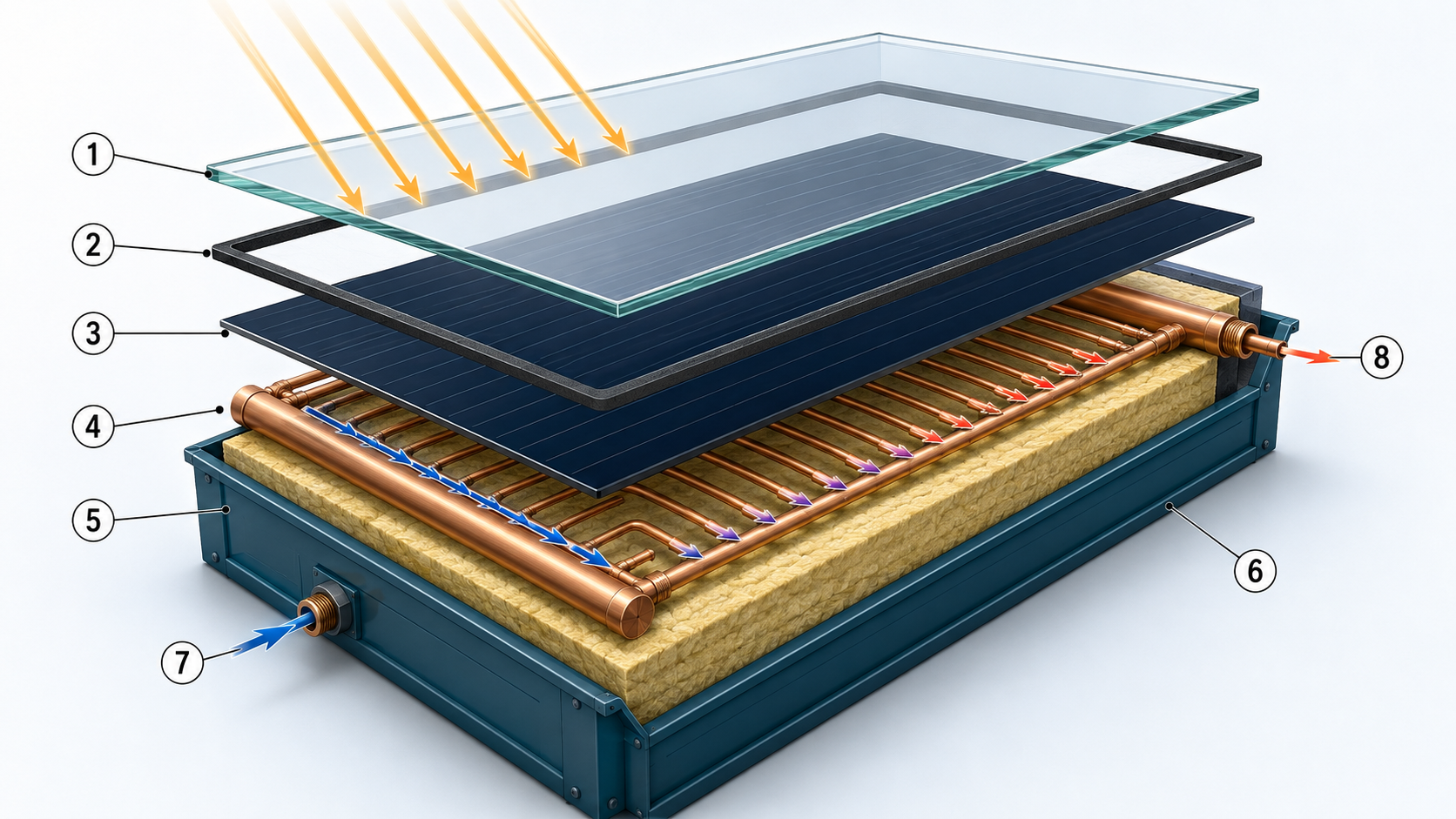
FPC
Selective absorber → copper risers → hot header → tank.
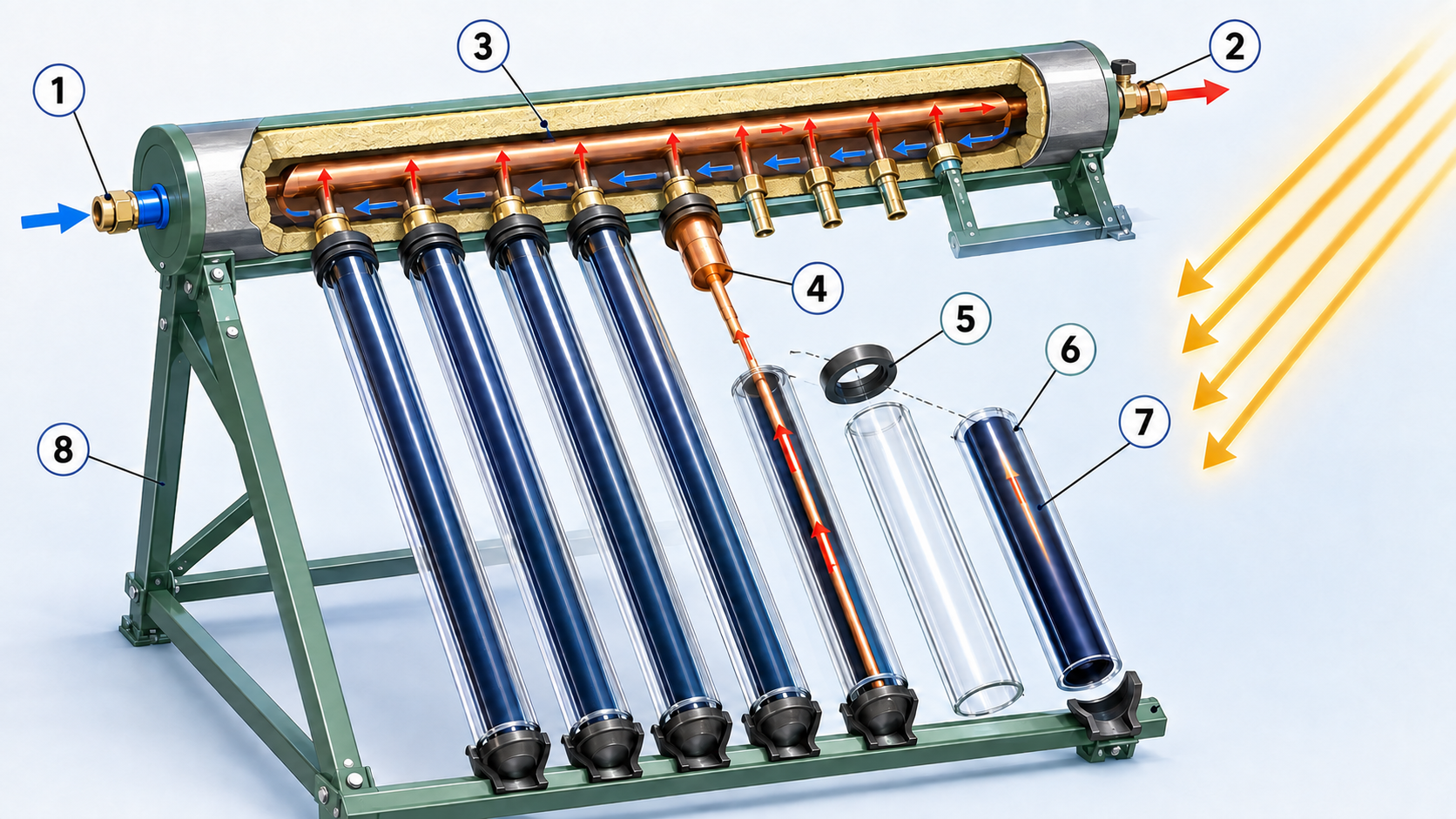
ETC
Coated vacuum tube → direct water or heat pipe → manifold → tank.
Passive thermosiphon vs active circulation
| Factor | Passive thermosiphon | Active / forced circulation |
|---|---|---|
| Flow driver | Density difference; no solar pump | Pump and differential controller |
| Tank position | Above collector | Flexible after hydraulic design |
| Typical use | Small/simple packages | Large, pressurised or remote-tank plants |
| Controls | Minimal | Sensors, pump logic, alarms and protection |
| Main risk | Air lock, reverse slope, low driving head | Pump/control failure or poor balancing |
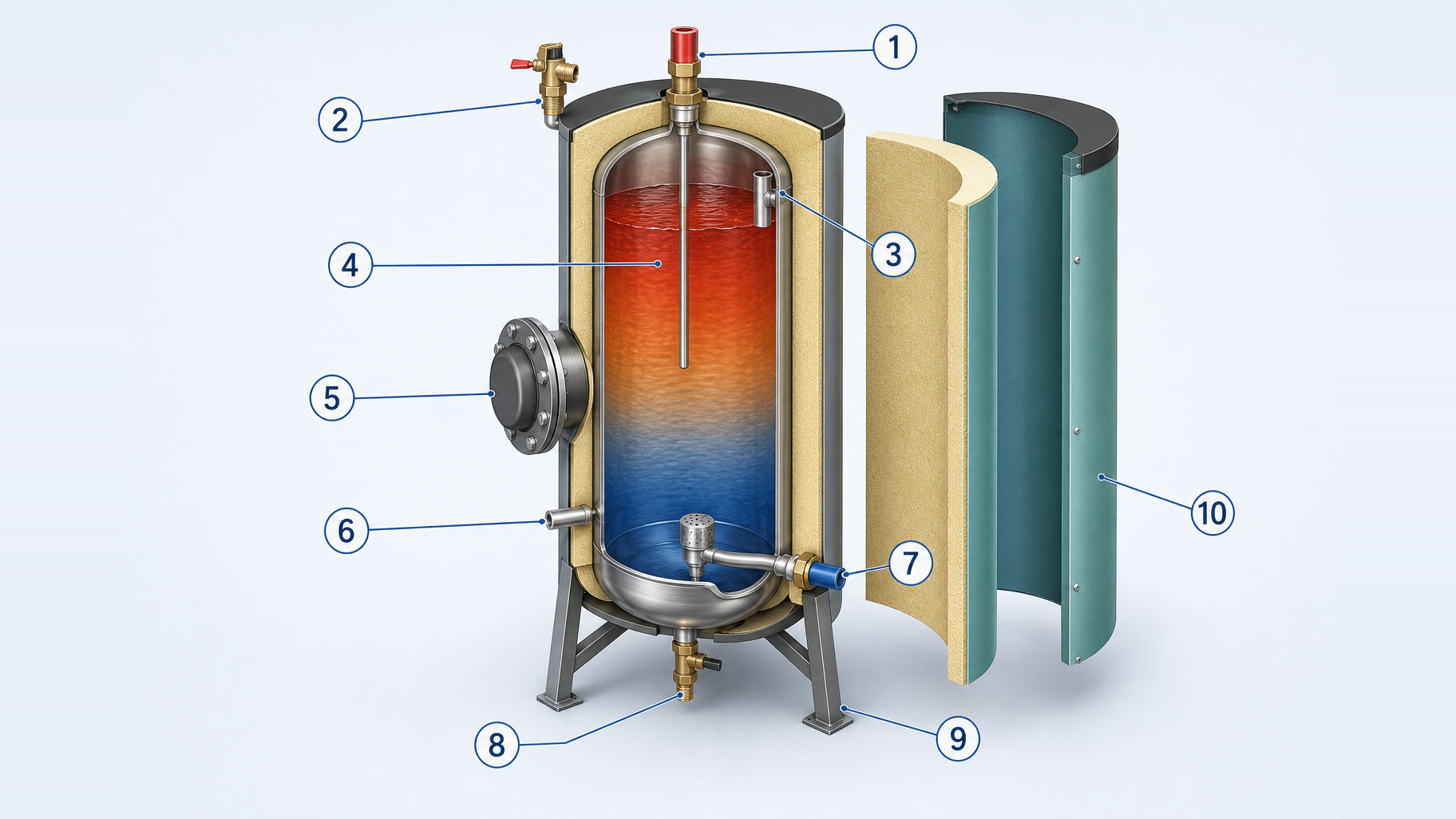
Why storage matters
The tank preserves the work done by the collector.
Hot water remains at the top, cooler water stays below, insulation slows standby loss and correctly placed nozzles prevent mixing. Backup heat—when included—should be controlled by temperature, level and safety limits rather than left continuously on.
Open the tank exploded guide →